Pakistan's Deputy Prime Minister Ishaq Dar stated that the Indus Waters Treaty remains valid and binding, rejecting India's decision to revoke it following a terror attack. He emphasised the treaty's role in regional peace and warned of "profound consequences" if Pakistan is deprived of its allocated waters. PPP chief Bilawal Bhutto Zardari also proposed an international convention against the weaponisation of waterways.

India said the Hague-based Court of Arbitration has no jurisdiction over its sovereign decisions on the Indus Waters Treaty.

Weeks before the Pahalgam attack, Munir said Pakistan will not forget the issue of Kashmir, asserting, "It was our jugular vein." His comments were trashed by India.

As India marks the first anniversary of Operation Sindoor, its decisive military action against the terror hotbeds in Pakistan, the ministry of external affairs sharply rebuked Islamabad's policy of terrorism.
India on Saturday rejected the "so-called award by the illegally constituted Court of Arbitration (CoA)" on May 15 and said its decision to hold the Indus Waters Treaty in abeyance remains in force.
Pakistan's military leadership has committed to securing the country's "rightful share" of water under the Indus Water Treaty, following India's actions post-Pahalgam attack. The military also expressed concerns over militant activities from Afghan territory and reaffirmed support for Kashmiris, vowing continued operations against terrorism.

The tour of the Pakistani side was originally scheduled in October 2018 but was postponed because of local bodies elections in Jammu and Kashmir.

The Indian contingent made a striking appearance at the Para Asian Games opening ceremony in Nagoya, Japan, on Sunday, wearing ceremonial blazers adorned with motifs inspired by 5,000 years of Indian civilisation, including Indus Valley seals and SaptSindhu. Led by Paralympic medallist Simran Sharma and top shuttler Pramod Bhagat, over 100 athletes proudly represented India, which has a 281-member contingent competing across 11 disciplines. The Games will conclude on October 24.

Pakistan has voiced concerns over the alleged variations in the flow of the Chenab River and has written a letter to India seeking clarification. They also commented on an incident in Bihar involving the removal of a Muslim woman's veil.
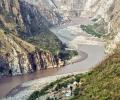
Pakistan may face a significant water shortage during the Kharif season due to reduced water supplies from India.
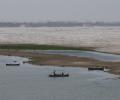
Weeks after India placed the 1960 Indus Waters Treaty (IWT) in abeyance following the April 22 Pahalgam terror attack, Pakistan has signalled its willingness to discuss New Delhi's long-standing concerns about the treaty, sources said.

India strongly criticised Pakistan at the United Nations, labelling it a "Frankenstein state" for its alleged support of terrorism. The remarks came after Pakistan and the OIC raised the Kashmir issue, which India firmly rejected, reiterating Jammu and Kashmir's integral status. India also deemed the Indus Water Treaty "outdated" given Pakistan's policies.
'India's letter to Pakistan on April 24 (2025; two days after the Pahalgam terrorist attack) didn't tear up the treaty -- but it did put it on ice.'

Another official said that India is planning to enhance its current hydropower capacity of around 3000 megawatts on the rivers that were earlier being used by Pakistan and a feasibility study in this regard is planned, the official said
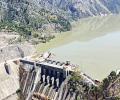
India has stopped releasing water from the Baglihar Dam on the Chenab River and is planning similar measures at the Kishanganga Dam on the Jhelum River, following a recent terror attack in Jammu and Kashmir. These hydroelectric dams offer India the ability to regulate water releases. This decision potentially affects the Indus Waters Treaty, a decades-old agreement between India and Pakistan governing the use of the Indus River and its tributaries. The Baglihar and Kishanganga dams have been points of contention between the two nations in the past.
India has suspended the Indus Waters Treaty with immediate effect, accusing Pakistan of breaching the pact by refusing to negotiate modifications and engaging in sustained cross-border terrorism. The decision follows a recent terror attack in Jammu and Kashmir that killed 26 people. Pakistan has rejected India's move, calling it an "act of war."
Experts discuss the Indus Waters Treaty, highlighting its engineering aspects and addressing criticisms of unfairness to India.

Pakistan was created as a result of the 1947 Partition of then-undivided India, and the Sindh region near the river Indus has been part of Pakistan since then.
The Indus Waters Treaty, brokered by the World Bank, has governed the use of the Indus River and its tributaries between India and Pakistan since 1960.
The Indus system of rivers comprises the main river -- the Indus -- along with its five left bank tributaries, namely, the Ravi, the Beas, the Sutlej, the Jhelum and the Chenab. The right bank tributary, the Kabul, does not flow through India.

A Pakistani senator has warned that India's approval of a hydel power project on the Chenab River will further inflame tensions between the two countries, particularly in light of the suspended Indus Waters Treaty.
The Centre is planning to undertake a study to look into ways to maximise the use of the quantum of water from the three rivers that Pakistan had earlier used under the Indus Water Treaty, now that the agreement has been suspended, officials said.
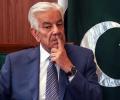
Pakistan's Defence Minister Khawaja Asif has issued a war threat against India, citing water security as a national concern. This comes as Pakistan grapples with a severe internal water crisis, attributed by experts to mismanagement, and India maintains its suspension of the Indus Waters Treaty following a terror attack. Asif accused India of "weaponising water" but admitted to lacking current data on the situation.
China and Pakistan concluded their strategic dialogue, reiterating their opposition to unilateral actions in South Asia and discussing Kashmir, Afghanistan, and trilateral cooperation.

Pakistan's former foreign minister Bilawal Bhutto-Zardari on Monday said his country will go to war if India denies Islamabad its fair share of water under the Indus Waters Treaty (IWT).
Emergency legal and constitutional consultations were held in response to India's unilateral move, and preliminary groundwork has been completed after which it has been decided to formally serve a diplomatic notice to India over the suspension of the treaty
India has asserted that the Indus Waters Treaty with Pakistan will remain in "abeyance" until Islamabad "credibly and irrevocably" abjures support to cross-border terrorism. External Affairs Ministry spokesperson Randhir Jaiswal said that any bilateral talks with Islamabad will only be on vacation of illegally occupied territories of Kashmir by Pakistan. He also said that India is open to discussing the handing over of terrorists whose list was provided to Pakistan some years ago. India on April 23 announced a raft of punitive measures against Pakistan including suspension of the Indus Waters Treaty after the Pahalgam terror attack that killed 26 civilians.
'Militarily, it risks escalating tensions with Pakistan, potentially triggering conflict due to Pakistan's heavy reliance on the Indus.'
It is the first major contact of its kind since the Pakistan-India conflict in May, the paper said, citing sources.
Pakistan has written to India seeking information about the Svalkot hydroelectric project on the River Chenab, according to the Foreign Office spokesperson.

Shehbaz emphasised that water was a lifeline for Pakistan, and no compromise would be made on the country's rights under international agreements, as per Geo News.
India has accused Pakistan of violating the spirit of the Indus Waters Treaty by engaging in acts of terrorism and refusing to modify the treaty. India's Permanent Representative to the UN, Ambassador Parvathaneni Harish, addressed the UN Security Council, highlighting Pakistan's disinformation regarding the treaty and its continued support for cross-border terrorism. He stated that India has always acted responsibly as an upper riparian state and that Pakistan's actions have jeopardized civilian lives, religious harmony, and economic prosperity. India has suspended the treaty until Pakistan ends its support for terrorism.
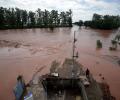
Pakistan has urged India to fully adhere to the Indus Water Treaty (IWT), expressing concerns about the level of detail in flood information shared through diplomatic channels.
India has issued a notice to Pakistan for modification of the Indus Waters Treaty of September 1960 following Islamabad's "intransigence" on its implementation

'There is no doubt about the antiquity of Tamil Nadu.'
Pakistan has halted the construction of contentious canals in Punjab province after India suspended the Indus Waters Treaty following a deadly terrorist attack in Kashmir. The decision to suspend the canals project was made after Prime Minister Shehbaz Sharif met with PPP chairman Bilawal Bhutto-Zardari and agreed to address the concerns of Sindh province, where the project had sparked protests. The canals project, aimed at irrigating the desert region in Punjab, was seen as a threat to water resources in Sindh. Both sides have agreed to seek consensus on the issue in the Council of Common Interests (CCI), a high-powered inter-provincial body. Meanwhile, Pakistan has reiterated the importance of the Indus Water Treaty for its water security and economy, and condemned India's move to suspend it.

Lieutenant Governor Manoj Sinha asserts that the Indus Waters Treaty was a 'historic mistake' and its termination will greatly benefit Jammu and Kashmir by allowing it to harness its hydropower potential.

Army officials in Leh were a part of a meeting convened by the Jammu and Kashmir government that agreed that China was encroaching into the land with "specific design" to grab a particular area to extend its control till Indus river.

AIMIM chief Asaduddin Owaisi slammed Pakistani politician Bilawal Bhutto-Zardari for his "blood would flow in rivers" remark and called former cricketer Shahid Afridi a "joker" for his comment on the Pahalgam terror attack. Owaisi also supported India's decision to suspend the Indus Waters Treaty and called for Pakistan to be placed on the FATF grey list. He also advocated for cyber attacks against Pakistan.
The talks as part of the annual Permanent Indus Commission meeting are being held after a gap of over two years.
